

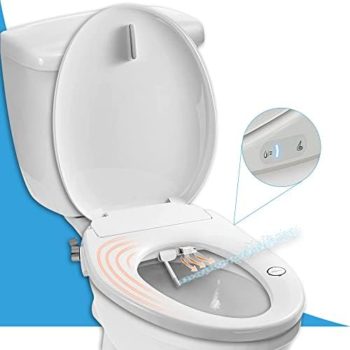
All products are selected by our Smart Flush editors. If you buy something through our links as an Amazon Associate we earn from qualifying purchases.
Bidets have long been a staple of European and Asian bathrooms, and for good reason — they offer a cleaner, gentler, and more eco-friendly alternative to toilet paper alone. If you’ve just installed one (or you’re considering it), this guide walks you through exactly how to use a bathroom bidet, covers every major bidet type, and answers the most common first-timer questions.
Quick answer: To use a bidet, finish using the toilet, position yourself over the bidet or on the bidet seat, activate the water stream using the knob or electronic controls, adjust pressure and temperature to your comfort, cleanse for 20–60 seconds, then pat dry with a small amount of toilet paper or a dedicated towel.
What is a bidet and why should you use one?
A bidet is a bathroom fixture or toilet attachment that uses a directed stream of water for personal hygiene after using the toilet. Unlike toilet paper, water effectively removes bacteria and residue without abrasion, reducing the risk of irritation — particularly important for people with haemorrhoids, sensitive skin, or postpartum recovery needs.
Beyond comfort, bidets dramatically reduce household toilet paper consumption. Studies suggest bidet users can cut their toilet paper use by up to 75%, making them an environmentally sustainable bathroom upgrade.
Types of bidets: which one do you have?
Before learning how to use your bidet, it helps to know which type you’re working with. The method varies slightly depending on the fixture.
Type 01
Standalone bidet
A separate porcelain basin next to your toilet. Common in European and South American bathrooms.
Type 02
Bidet toilet seat
Replaces your existing toilet seat. Often includes a heated seat, warm water, and air dryer.
Type 03
Handheld bidet sprayer
A hose-mounted nozzle attached to your toilet’s water supply. Simple, affordable, and easy to install.
Type 04
Travel bidet
A portable squeeze or battery-operated bottle for use away from home.
How to use a standalone bidet: step-by-step
The standalone bidet is the most unfamiliar type for newcomers. Here’s how to use it correctly:
Step 1
Finish on the toilet first
Use your toilet as normal. The bidet is used after, not instead of, the toilet.
Step 2
Straddle or sit facing away
Most users sit facing the wall (same direction as the toilet). Face toward the controls for easier access.
Step 3
Turn on the water
Turn the knob slowly. Cold water comes first — adjust to a warm, comfortable temperature.
Step 4
Cleanse thoroughly
Let the water stream do the work. Use your hand to assist if needed, then rinse your hand afterward.
Step 5
Turn off and dry
Turn off the water, pat dry with toilet paper or a clean bidet towel, and redress.
How to use a bidet toilet seat (electronic bidet)
Electronic bidet seats — like those from Toto, Brondell, or Bio Bidet — are among the most common bidet upgrades in modern homes. After using the toilet as normal, remain seated and locate the side panel or remote control. Select “rear wash” or “front wash” depending on your needs. Use the pressure and temperature controls to personalise the stream — most users find a low-to-medium pressure setting most comfortable. After 30–60 seconds of cleansing, use the warm air dryer function (if available) or pat dry with a small piece of toilet paper.
Pro tips for bidet seat users
- Start with the lowest water pressure setting until you find your preference.
- The nozzle self-cleans before and after each use on most modern models.
- Use the “oscillating” or “pulsating” wash mode for more thorough cleansing.
- Never use the bidet nozzle to clean objects — it’s for personal hygiene only.
How to use a handheld bidet sprayer
The handheld bidet sprayer (also called a shattaf or bum gun) is popular in Southeast Asian and Middle Eastern bathrooms. After using the toilet, reach for the sprayer mounted on the side of your toilet tank. Point the nozzle toward the area you want to cleanse — aim carefully before you squeeze the trigger. Apply gentle pressure, cleanse for 20–40 seconds, then pat dry. Always hang the sprayer back on its holder when finished to keep the nozzle off the floor.
How to use a travel bidet
Fill the travel bidet bottle with warm water before entering the stall. After using a public toilet, point the nozzle at the target area and squeeze (or activate the pump) to release a directed stream. Travel bidets are discreet and highly effective for maintaining hygiene on the go. Keep the bottle in a waterproof pouch in your bag.
Bidet hygiene: common questions answered
Do you use soap with a bidet?
For everyday use, plain water is sufficient and gentle enough for sensitive skin. Soap can be used occasionally for a deeper cleanse, but dermatologists recommend avoiding harsh soaps in delicate areas, as they can disrupt the skin’s natural pH.
Do bidets spread bacteria?
No — modern bidets are designed with hygiene in mind. Electronic bidet nozzles self-clean between uses. Handheld sprayers should be rinsed after each use. Research consistently shows bidets reduce bacterial contamination compared to toilet paper alone.
Should you wipe before using a bidet?
It’s a matter of personal preference. Some users do a quick pre-wipe to remove bulk material before using the bidet; others go straight to the water. Either approach is valid — the bidet is effective both ways.
How do I clean my bidet?
Wipe down the basin or seat weekly with a mild, non-abrasive cleaner. Avoid bleach on electronic components. For standalone bidets, rinse the basin after each use. Handheld sprayers benefit from a weekly wipe-down of the nozzle head.
Making the switch: what to expect in the first week
First-time bidet users almost universally report that the transition feels awkward for two to three days before becoming second nature. You may use a small amount of toilet paper to pat dry at first — this is completely normal and expected. Within a week, most users find they’ve reduced their toilet paper use significantly and would never go back to paper alone.
If you’re using an electronic bidet seat, spend a few minutes reviewing the control panel before your first use so you’re not adjusting settings mid-session. Most seats default to warm water and low pressure — a gentle introduction for newcomers.
Bidets are also highly recommended by healthcare professionals for individuals recovering from surgery, managing inflammatory bowel conditions, or dealing with haemorrhoids, where abrasive paper can cause additional discomfort and slow healing.
Environmental and cost benefits worth knowing
The average person uses approximately 100 rolls of toilet paper per year. At current prices, switching to a bidet can save a household hundreds of dollars annually while preventing significant paper waste. The water used per bidet session (roughly 0.1 to 0.5 litres) is minimal compared to the water required to produce a single roll of toilet paper (approximately 140 litres). From both an environmental and economic standpoint, the bidet delivers a compelling long-term return on its modest upfront cost.rings.

- CLEAN AND REFRESHING: With Brondell’s Ecoseat 101 Bidet, you’ll experience a soothing, freshwater wash that leaves you feeling clean and rejuvenated. Plus, this economical bidet requires no electricity or batteries.
- HIGH-QUALITY PARTS: Enjoy dual nozzles for rear and front washes, a gentle closing seat, and sturdy, sittable lid.
- EASY INSTALLATION: This elongated bidet toilet seat measures 20. 03” x 14. 39” x 2. 55” and can easily be self-installed in minutes—no plumbers necessary!