

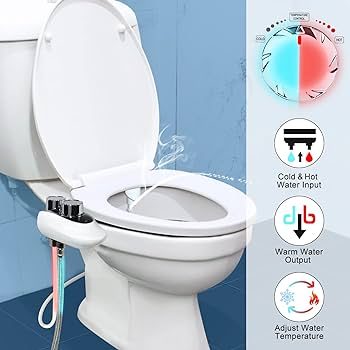
All products are selected by our Smart Flush editors. If you buy something through our links as an Amazon Associate we earn from qualifying purchases.
A bidet with warm water and a built-in dryer offers a fully hands-free cleansing experience — no more cold shocks, no paper dependency. This guide covers everything you need to know before buying one, from heating systems and dryer performance to installation requirements and long-term value.bidet seatwarm water bidetbidet dryerelectric bidettoilet seat bidet
Why choose a bidet with warm water and a dryer?
Standard bidets can deliver an unpleasant cold-water blast, especially in winter months. A heated water bidet eliminates that shock and transforms what could be an abrupt experience into a genuinely comfortable one. Add a warm-air dryer, and you have a bathroom fixture that significantly reduces — or entirely eliminates — toilet paper use, making it both eco-friendly and cost-effective over time.
Beyond comfort, bidets with warm water and dryers are frequently recommended by colorectal surgeons, gastroenterologists, and continence nurses for people with hemorrhoids, Crohn’s disease, postpartum recovery needs, and mobility challenges. The hygienic advantage of water cleansing over paper wiping is well-documented in clinical literature, making this a meaningful health investment, not just a luxury upgrade.
How warm water heating systems work
The two main heating technologies you’ll encounter are tank-based heaters and on-demand (tankless) heaters. Understanding the difference is essential to choosing the right bidet toilet seat for your household.
Tank heater (reservoir)
Stores 0.03–0.07L of pre-heated water. Warm water is instantly ready but runs cool after ~45–60 seconds of continuous use. Best for single-user or short-rinse habits.
On-demand (tankless) heater
Heats water the moment you activate the wash. Provides unlimited warm water with no cool-off period. Requires slightly more wattage but eliminates standby energy loss.
Hybrid ceramic heater
A newer design combining a small reservoir with instantaneous heating coils. Offers a fast warm-up and sustained temperature — typically found in premium bidet seats.
Cold-water-only with inline heater
A budget category that pairs a non-electric bidet with a separate inline water heater connected to your hot water supply. Less integrated but affordable.
Quick answer — featured snippet
A bidet with warm water and dryer works by connecting to your toilet’s water supply and a standard electrical outlet. The seat heats incoming water via a reservoir or on-demand heater, delivers a gentle aerated spray at your chosen temperature, then activates a built-in warm-air dryer fan to dry the area — all hands-free.
What to look for in a bidet dryer
Not all warm-air dryers perform equally. Many entry-level bidet seats include a dryer that produces barely perceptible airflow — more of a courtesy feature than a functional one. Here’s what separates a genuinely useful dryer from a disappointing afterthought.
Airflow temperature and adjustment range
A quality bidet dryer should reach at least 40°C (104°F) of air temperature with multiple heat settings — typically three to five levels. Look for a model that allows you to set a lower temperature in summer and a higher one in cooler months. Some models with oscillating nozzles also move during the drying phase, which can meaningfully reduce drying time.
Drying time expectations
Be realistic: even the best bidet dryers take 30–90 seconds for a reasonably thorough dry. If you’re accustomed to a quick paper pat-down, the dryer alone may feel slow at first. Many experienced bidet users do a short pat with a small reusable cloth at the end. For most people, the dryer handles 80–90% of the moisture, and habits adjust within a week or two.
Noise level
Dryer fans range from whisper-quiet (under 45 dB) to noticeably loud (60 dB+). If your bathroom shares a wall with a bedroom or is frequently used at night, noise level is worth prioritising. Manufacturer specs often omit this detail — look for independent reviews or community forums where users report real-world noise levels.
Key features to compare when shopping
Features checklist
- Adjustable water temperature — at least 3 settings, ideally 5
- Adjustable water pressure — 3–5 levels for sensitive or thorough cleansing
- Nozzle self-cleaning — stainless steel nozzle with pre- and post-wash auto-clean
- Heated toilet seat — adjustable seat warmth prevents cold-seat discomfort
- Posterior and feminine wash modes — separate nozzle positions for different body areas
- Warm-air dryer with adjustable temperature
- Slow-close lid and seat — reduces noise and wear
- Eco/energy-saving mode — reduces standby power consumption
- Remote or side-panel control — remotes are generally more ergonomic
- Night light — soft LED for nighttime use without full overhead lighting
Electrical and installation requirements
All electric bidet seats with warm water and dryer functionality require a grounded electrical outlet (GFCI-protected is strongly recommended in bathroom settings) within reach of the toilet — typically within 1.2 metres (4 feet) of the toilet’s water supply valve. In most homes, a licensed electrician can add a GFCI outlet behind the toilet in under two hours if one isn’t already there.
Important: Never use an extension cord with an electric bidet seat. This is both a safety hazard and will void most manufacturer warranties. If a dedicated outlet is not currently accessible, hire a licensed electrician before purchasing.
Installation itself is straightforward for a confident DIYer: remove the existing toilet seat, mount the bidet seat’s hinges, connect the T-valve to the water supply, and plug in. Most installations take 20–40 minutes. No plumbing modifications are required for standard tank toilets.
Are bidets with dryers worth the cost?
The upfront investment for a quality bidet with warm water and dryer ranges from around $200 for entry-level models to $800–$1,500 for premium units from brands with strong reliability records. When you factor in the reduction in toilet paper spending — the average household in Australia and New Zealand spends between NZD $150–$300 annually on toilet paper — a mid-range bidet pays for itself within two to four years.
From an environmental standpoint, a single roll of toilet paper requires approximately 140 litres of water to manufacture. Even accounting for the water a bidet uses per wash cycle (0.35–0.5 litres), the net water savings over a year of bidet use are substantial. This makes the bidet with warm water and dryer a genuinely sustainable bathroom choice, not merely a comfort upgrade.

- CLEAN AND REFRESHING: With Brondell’s Ecoseat 101 Bidet, you’ll experience a soothing, freshwater wash that leaves you feeling clean and rejuvenated. Plus, this economical bidet requires no electricity or batteries.
- HIGH-QUALITY PARTS: Enjoy dual nozzles for rear and front washes, a gentle closing seat, and sturdy, sittable lid.
- EASY INSTALLATION: This elongated bidet toilet seat measures 20. 03” x 14. 39” x 2. 55” and can easily be self-installed in minutes—no plumbers necessary!