

All products are selected by our Smart Flush editors. If you buy something through our links as an Amazon Associate we earn from qualifying purchases.
Bidets have quietly moved from a European luxury into one of the most practical bathroom upgrades an American household can make. With toilet paper prices still stubbornly high and hygiene awareness at an all-time peak, the demand for an affordable bidet has never been stronger. The good news? You no longer need to spend hundreds of dollars to experience genuine cleanliness and comfort.
This guide cuts through the noise and gives you the real framework to find the best budget bidet for your bathroom — whether you rent or own, prefer a simple attachment or a full seat upgrade.
What Is a Bidet and Why Should You Care?
A bidet is a plumbing fixture or toilet attachment designed to cleanse the body with a stream of water after using the toilet. Originally popularized in France and widely adopted across Asia, South America, and Southern Europe, bidets are now becoming a mainstream staple in North American bathrooms.
Quick Answer — Featured Snippet
A bidet cleans with water instead of dry paper, reducing irritation, improving hygiene, and lowering toilet paper use by up to 75%. Affordable models start at under $30 and attach directly to your existing toilet — no plumber required.
From a hygiene standpoint, water is simply more effective than paper. Dermatologists and gastroenterologists have long noted that mechanical wiping can irritate sensitive skin, exacerbate hemorrhoids, and leave residue. A low-cost bidet attachment addresses all three problems — and does so without any special installation skills.
Types of Affordable Bidets Explained
Understanding your options is the first step to a smart purchase. Here are the four main categories you’ll encounter when shopping for a cheap bidet that actually works:
1. Bidet Toilet Seat Attachments
These slim panels sit between your existing toilet seat and bowl and connect to your cold water supply line. They’re the most popular entry-level option. Prices start around $25–$60. Installation takes under 10 minutes and requires zero plumbing experience. This is the category where most people searching for an affordable bidet attachment will find their match.
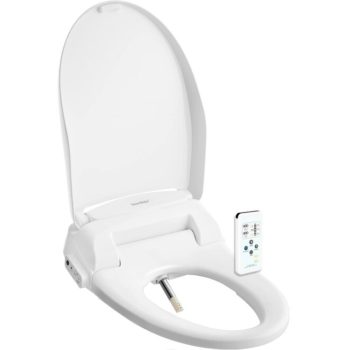
2. Bidet Toilet Seats (Replacement Seats)
These replace your entire toilet seat and come with features like heated seats, adjustable water temperature, and air dryers. While costlier than basic attachments, budget versions are available in the $80–$150 range — a significant upgrade without the premium price tag of Japanese-style smart toilet seats.
3. Handheld Bidet Sprayers
Also called bidet showers or bum guns, these are hose-and-nozzle units mounted beside your toilet. They offer the most control, work for personal hygiene as well as cleaning the bowl, and are excellent for families with young children. Most cost between $20–$45 and are among the cheapest bidet options available.
4. Portable & Travel Bidets
Squeeze-bottle style devices that you fill with water and use manually. Ideal for travel, post-surgery recovery, or camping. Prices typically fall between $10–$25.
$25
Entry-level attachment price
75%
Average TP reduction
10 min
Typical install time
$182
Avg. annual TP spend saved
Key Features to Look for in a Budget Bidet
Not all inexpensive bidets are equal. When evaluating a low-cost bidet, focus on these critical factors:
- Adjustable water pressure — essential for comfort across family members with different sensitivities
- Nozzle self-cleaning function — improves hygiene and extends product life
- Dual-nozzle option — separate posterior and feminine wash settings
- Angle adjustment — lets you fine-tune the water stream position
- Brass or stainless fittings — far more durable than all-plastic connectors under water pressure
- Universal seat compatibility — fits both round and elongated toilet bowls
- Slow-close seat — prevents slamming; a sign of build quality
Many shoppers make the mistake of choosing purely on price. A bidet that costs $5 less but lacks pressure control or uses flimsy plastic valves will frustrate you within months. Spend slightly more for metal fittings and real pressure adjustment — your bathroom (and your patience) will thank you.
How Much Does a Good Bidet Cost?
Price Breakdown at a Glance
Basic cold-water bidet attachments: $25–$60. Dual-temperature bidet seats: $80–$150. Handheld sprayers: $20–$45. Portable/travel bidets: $10–$25. Smart electric bidet seats (premium): $200–$600+.
The sweet spot for most households is the $30–$70 range. In this tier, you can find attachments with dual nozzles, solid stainless steel braided hose connections, adjustable pressure, and broad toilet compatibility. Spending more only makes sense if you want heated water, a dryer, or a deodorizer — features that require an electrical outlet near your toilet.
For renters or first-time buyers, a non-electric bidet attachment is the most practical starting point. No electrician, no plumber — just a wrench and a 10-minute Saturday morning project.
Are Cheap Bidets Worth It? What the Evidence Shows
Skeptics often wonder whether a low-cost model can deliver real results. The answer, backed by hygiene research and consumer data, is yes — with caveats. A budget bidet performs the core function — water-based cleansing — just as well as luxury models. What it sacrifices is comfort features: no seat heating, no warm water, no remote control.
From an economic standpoint, the math is compelling. The average American household spends $182 per year on toilet paper. A $35 bidet attachment pays for itself in under three months and typically lasts three to five years with no maintenance costs. Over a five-year period, that’s roughly $875 in savings from a single inexpensive purchase.
Environmental impact is equally significant. Producing a single roll of toilet paper requires approximately 37 gallons of water and 1.3 kWh of energy. A bidet uses between one-eighth and one-third of a pint per use — a dramatic resource reduction when scaled over a lifetime.
Installation: Easier Than You Think
One of the biggest misconceptions about bidets is that they require professional installation. For the vast majority of affordable bidet attachments and handheld sprayers, installation is genuinely DIY-friendly. Here’s the general process for a standard non-electric attachment:
- Turn off the water supply valve behind your toilet
- Flush to empty the tank and relieve pressure
- Remove your existing toilet seat bolts and lift the seat off
- Slide the bidet attachment mounting plate into position
- Reattach your toilet seat over the bidet plate
- Connect the bidet’s T-valve to the fill valve at the base of the tank
- Attach the bidet hose from the T-valve to the bidet inlet
- Turn water supply back on and test for leaks
The entire process takes 10–20 minutes and requires only an adjustable wrench. Most quality brands include all hardware and step-by-step instructions in the box.
Who Benefits Most from an Affordable Bidet?
While a bidet is useful for everyone, certain groups find it particularly transformative:
People with limited mobility or arthritis often find standard wiping difficult or painful. A bidet removes that physical challenge entirely. Those with hemorrhoids, IBS, or post-surgical recovery needs benefit from the gentleness of water versus abrasive paper. Parents of young children find handheld sprayers invaluable for potty training. And eco-conscious households appreciate the dramatic reduction in paper waste and water usage compared to toilet paper production.
Frequently Asked Questions
Do bidets require electricity?
Most affordable bidet attachments and handheld sprayers are entirely non-electric. They connect directly to your cold water supply. Electric models offer warm water and dryers but cost significantly more and need an outlet nearby.
Will a bidet fit my toilet?
Most budget bidet attachments are designed to fit standard round and elongated toilets. Always check compatibility before purchase — particularly for one-piece or French-curve toilets, which may need specific models.
Is the water cold in a non-electric bidet?
Yes — cold-water-only attachments use unheated supply water. While initially surprising, most users adapt quickly. In warmer climates, supply water is usually room temperature. Electric seats with warm water are available for $80+.
How do I keep a bidet clean?
Most modern affordable bidets feature a self-cleaning nozzle that rinses itself before and after each use. Wipe the exterior with a mild cleaner weekly. Avoid bleach-based cleaners, which can degrade plastic components over time.
Can renters install a bidet?
Absolutely. Non-electric bidet attachments make no permanent modifications to your toilet and can be uninstalled in minutes. Most landlords have no issue with them. Always restore the original setup when moving out.
Making the Right Choice
The best affordable bidet for you depends on three things: your toilet type, whether you want warm water, and how much counter or tank space you have for a sprayer hose. For most people — renters, first-timers, and budget-focused buyers — a non-electric dual-nozzle bidet attachment with metal fittings in the $35–$65 range is the ideal starting point.
Once you’ve experienced water-based cleansing, returning to paper alone feels like a step backward. The upfront investment is modest, the installation is painless, and the daily payoff — in cleanliness, comfort, and savings — is surprisingly significant. Your bathroom upgrade doesn’t have to be expensive to be genuinely life-changing.

- CLEAN AND REFRESHING: With Brondell’s Ecoseat 101 Bidet, you’ll experience a soothing, freshwater wash that leaves you feeling clean and rejuvenated. Plus, this economical bidet requires no electricity or batteries.
- HIGH-QUALITY PARTS: Enjoy dual nozzles for rear and front washes, a gentle closing seat, and sturdy, sittable lid.
- EASY INSTALLATION: This elongated bidet toilet seat measures 20. 03” x 14. 39” x 2. 55” and can easily be self-installed in minutes—no plumbers necessary!