

All products are selected by our Smart Flush editors. If you buy something through our links as an Amazon Associate we earn from qualifying purchases.
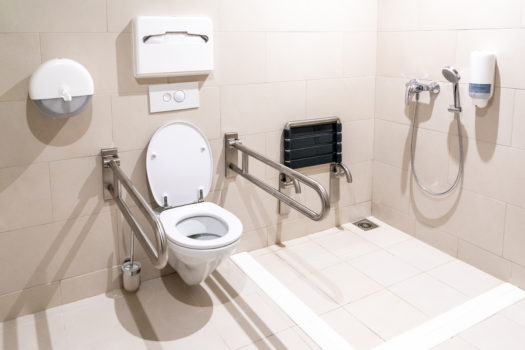
When it comes to bathroom accessibility, an ADA compliant bidet toilet represents one of the most meaningful upgrades a home, healthcare facility, or commercial restroom can make. Combining the functional requirements of the Americans with Disabilities Act with modern bidet technology, these fixtures promote dignity, independence, and superior personal hygiene for people with mobility limitations, elderly individuals, and those recovering from surgery or injury.
In this guide, you’ll learn exactly what makes a bidet toilet ADA compliant, which features matter most, and how to choose the right accessible bidet toilet seat or integrated unit for your specific needs.
What Does “ADA Compliant” Mean for a Bidet Toilet?
The Americans with Disabilities Act (ADA) sets specific standards for accessible design in public and commercial facilities — and these guidelines are increasingly being adopted in private residences, particularly those built or remodeled under universal design principles.
For a toilet to meet ADA standards, it must generally satisfy the following criteria:
- Seat height: Between 17 and 19 inches from the finished floor — often called “comfort height” or “chair height.” This range makes sitting down and standing up significantly easier for people with limited knee or hip mobility.
- Centerline positioning: The toilet must be centered 16 to 18 inches from the side wall to allow room for a grab bar and wheelchair transfer.
- Clear floor space: A 60-inch wide by 56-inch deep (for wall-mounted) or 59-inch deep (for floor-mounted) clear space must be maintained in front of the toilet.
- Flush control location: Controls must be on the open (transfer) side of the toilet, operable with a closed fist or limited grip strength.
When a bidet seat or integrated bidet toilet unit is added to this equation, the accessible bathroom fixture must maintain all of these clearances while adding bidet functionality in a way that is equally accessible.
Key Features of an ADA Compliant Bidet Toilet
1. Comfort Height Design
The most fundamental ADA toilet requirement — the 17–19 inch seat height — is non-negotiable. Many bidet toilet seats add approximately 1 inch of height to an existing toilet. For this reason, it’s important to verify that the combined height of your toilet bowl plus the bidet seat remains within the ADA-specified range. Integrated bidet toilet units (also known as washlet toilets or smart toilets) are purpose-engineered to meet this measurement from the factory.
2. Remote or Side-Panel Controls
Standard bidet controls located on a side arm panel may not always be reachable by wheelchair users during the transfer process. ADA-friendly bidet models often include a wireless remote control that can be mounted on a nearby wall, within easy reach of someone seated on the toilet. This design feature is crucial for individuals with limited shoulder range of motion or those who rely on one-handed operation.
💡 Pro tip: Look for bidet units with large-button remotes, tactile controls, or voice-activated features — these significantly improve usability for people with dexterity impairments or visual disabilities.
3. Adjustable Water Pressure and Temperature
One of the most cited benefits of bidet use for people with disabilities is the elimination of the need for extensive manual wiping. A high-quality accessible bidet toilet seat should offer adjustable water pressure (from very gentle to more powerful), adjustable water temperature, and an adjustable nozzle position so users of all body types and abilities can find a comfortable, effective setting without physical strain.
4. Heated Seat
While not an ADA requirement per se, a heated toilet seat is an important comfort feature for elderly users and individuals with circulatory conditions. Many ADA-oriented bidet toilets include multi-level seat heating as a standard feature.
5. Auto Open/Close Lid and Auto Flush
Touchless or automatic lid operation eliminates the need to lean forward — a movement that can be difficult or dangerous for those with balance issues or back problems. Auto-flush functionality is equally valuable, removing a manual step that can be challenging for users with limited hand strength.
Bidet Toilet Seats vs. Integrated Bidet Toilet Units
When exploring accessible hygiene solutions, you’ll generally encounter two product categories:
- Bidet toilet seats (add-on seats): These replace the existing toilet seat on a compatible toilet bowl. They’re a cost-effective way to add bidet functionality to an ADA-height toilet you already own. The key consideration is ensuring the combined seat height remains within the 17–19 inch ADA window.
- Integrated bidet toilet units (smart toilets): These are complete toilet and bidet systems in a single unit. They offer a sleeker profile, more advanced features, and are purpose-built to comply with ADA height requirements. They tend to be the preferred option for new construction or full bathroom remodels.
For most accessibility-focused installations, integrated units offer the most reliable path to full ADA compliance, while bidet seats provide a more budget-friendly upgrade path.
Who Benefits Most from an ADA Compliant Bidet Toilet?
The population that benefits from accessible bidet technology is broader than many people assume:
- Seniors and aging adults who want to age in place with greater independence
- Wheelchair users who require precise transfer clearances
- Post-surgical patients recovering from hip replacement, colorectal surgery, or spinal procedures
- People with arthritis, multiple sclerosis, Parkinson’s disease, or other mobility-limiting conditions
- Caregivers who support individuals with personal hygiene — an accessible bidet dramatically reduces the physical demands of caregiving
Installation Considerations for Accessible Bidet Toilets
Proper installation is just as important as product selection. For true ADA compliance, the toilet must be positioned correctly within the bathroom, with appropriate grab bars, clear floor space, and an accessible flush control. Working with a licensed contractor experienced in ADA-compliant bathroom remodeling is strongly recommended. Additionally, a GFCI-protected electrical outlet is typically required near the toilet to power the bidet’s electronic components.
Final Thoughts
An ADA compliant bidet toilet is far more than a luxury upgrade — it is an accessibility tool that restores independence, improves hygiene outcomes, and enhances quality of life for millions of people. Whether you’re retrofitting an existing bathroom with a bidet toilet seat or designing a fully accessible bathroom from scratch, understanding the ADA requirements and the features that matter most will help you make the right investment for the long term.
As universal design continues to shape the future of home and commercial construction, accessible bidet toilets are quickly becoming an expected standard rather than an optional extra. Now is the ideal time to explore your options.

- CLEAN AND REFRESHING: With Brondell’s Ecoseat 101 Bidet, you’ll experience a soothing, freshwater wash that leaves you feeling clean and rejuvenated. Plus, this economical bidet requires no electricity or batteries.
- HIGH-QUALITY PARTS: Enjoy dual nozzles for rear and front washes, a gentle closing seat, and sturdy, sittable lid.
- EASY INSTALLATION: This elongated bidet toilet seat measures 20. 03” x 14. 39” x 2. 55” and can easily be self-installed in minutes—no plumbers necessary!